Your First Event
The Red Hills Region SCCA welcomes and encourages newcomers to the Solo program. In an effort to make newcomers feel welcome, but also be informed, educated, comfortable and safe, we operate a Novice Program as part of every Solo event. This program orients the newcomer to focus initially as a driver and worker rather than a competitor.
Through the Novice Program you will have the opportunity to:
-
Register and participate in your first Solo event in the Novice Class. First time entrants are encouraged to participate in at least one or two Novice Class events before competing in the appropriate SCCA Class.
-
Be able to walk the course before the event begins with an experienced driver who will provide instructions on how to drive and work the course.
-
Ride along as a passenger with an experienced driver during a competitive course run.
-
Have an experienced driver ride along as a passenger during your Novice Class course runs.
Have a question? Post it on the Red Hills SCCA Facebook page.
Frequently Asked Questions (FAQs)
What do I need to do to prepare my car to autocross?
To run your car, it must pass technical inspection. You must drive wearing a your seat belt and a Snell approved helmet rated "SA", "K", or "M." If you don't own a helmet, loaners are available for free. It's usually a good idea to fill up your fuel tank before the event. Make sure you have at least 1/2 a tank of fuel in the car. Anything less might allow all the gas in your tank to move away from your fuel pump causing you to temporarily lose power in the middle of your run and add seconds to your time.
Back to Top
What is involved when going through Technical inspection — "tech" — and how long does that take?
Technical inspection is used to determine if the vehicle is safe for autocross competition. Inspection takes only a few minutes. The following areas are inspected for good working condition as well as any other deemed appropriate by the individual in charge of Tech that day.
| Seat Belts |
Present and working |
| Brake Pedal |
Firm and returns back to original position |
| Throttle Spring |
Present and working |
| Brake Fluid |
Reservoir not over or under filled |
| Battery tie down |
Present and working (bungee cords prohibited) |
| Throttle Pedal |
Returns back to original position |
| Trunk |
Free of any items which are not tied down |
| Suspension |
No loose or worn components |
| Tires |
No cords, blisters, or leaks |
| Wheels |
No cracked/bent wheels and all lug nuts present/tightened |
| Helmet |
Snell SA, K, or M approved |
| Interior |
Free of any items which are not tied down |
| Leak Check |
No fluids leaking from the car |
| Numbers |
Present and easily viewable by Timing & Scoring. You may use masking tape or shoe polish. |
Back to Top
Car Numbers and Class Letters Information
Your car needs to be appropriately numbered and lettered with your class so the grid, starter, workers and timing and scoring can read them. This helps keep the event moving along which translates into more seat time. Some use reusable vinyl magnets, shoe polish, masking tape, reusable static cling vinyl (for plastic cars panels), or permanent adhesive number/letter decals. The SCCA rulebook spells it out in Section 3.7 VEHICLE IDENTIFICATION: “All vehicles must display numbers and class letters on both sides (of the car), which must be readable by Timing and Scoring, Course, and Grid workers at all times.” The rules go on to explain the “numbers and letters must be a minimum of 8” high with a 1.25” stroke. Class letters must be a minimum of 4” high with a 0.75 stroke. In all cases, the height of the class letters must be between 25% and 75% of the height of the numbers.”
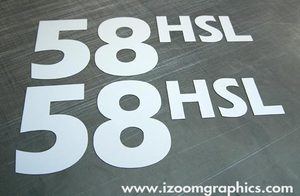 For most of us the convenient numbering system is with reusable flexible vinyl magnets. You can make your own or purchase them. To make your own simply purchase flexible magnetic vinyl sign material online or from a local sign shop. The magnetic vinyl material is usually sold in 24” wide sheets by the foot. One or two feet will be plenty to make a set of numbers and letters at a cost of about $10 to $20. The standard color is white but is available in a rainbow of colors for an extra cost depending on the supplier. Or scuff up the white vinyl magnet material with Scotch Bright pad and paint it any color with some spray paint for plastic. Vinyl magnetic material is sold in various thicknesses – thin (0.020”), medium (0.030”) and thick (0.060”). Thin is best used for refrigerator magnets and too light for car numbers. Thick can be too heavy and tends to fall or blow off the door. Medium thickness (0.030” or 1/32”) is best for car number and letter use. For most of us the convenient numbering system is with reusable flexible vinyl magnets. You can make your own or purchase them. To make your own simply purchase flexible magnetic vinyl sign material online or from a local sign shop. The magnetic vinyl material is usually sold in 24” wide sheets by the foot. One or two feet will be plenty to make a set of numbers and letters at a cost of about $10 to $20. The standard color is white but is available in a rainbow of colors for an extra cost depending on the supplier. Or scuff up the white vinyl magnet material with Scotch Bright pad and paint it any color with some spray paint for plastic. Vinyl magnetic material is sold in various thicknesses – thin (0.020”), medium (0.030”) and thick (0.060”). Thin is best used for refrigerator magnets and too light for car numbers. Thick can be too heavy and tends to fall or blow off the door. Medium thickness (0.030” or 1/32”) is best for car number and letter use.
If you’d rather keep things simple and purchase decals online look no further than SPS Solotime. SPS offers an assortment of number and letter materials in all sorts of combinations, colors, sizes, and fonts.
Back to Top
Who do I run against?
Each competitor is assigned a class according the car they drive and the level of modifications the car has undergone. You can learn about car classifications at the SCCA Solo Cars and Rules webpage. Cars run alone on the course (hence the name Solo) against a timer. Class winner is determined by the lowest time.
Back to Top
 What kind of cars can I run in? What kind of cars can I run in?
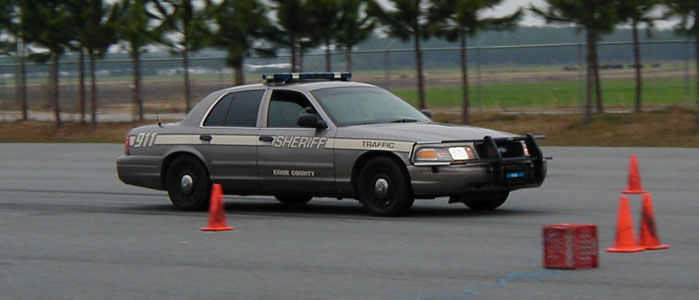
All cars are welcome to run as long as they pass technical inspection. Red Hills Region SCCA has welcomed everything from station wagons, daily drivers, go-karts, to full blown race cars. We might even have a police car take a run.
Back to Top
Can two people share the same car?
Yes. Two competitors can drive the same car. One competitor may also drive 2 cars, but they may not be the same car or in the same class.
Back to Top
 How fast will I be going? How fast will I be going?
SCCA rules dictate that a Solo (autocross) course may not be designed to allow cars to exceed posted highway speeds in the state the event is being held. 70 mph is the rule for Florida and Georgia, but most course designs allow a top speed at any given time of anywhere from 40 to 70 mph. This may not seem fast, in a straight line, but try to imagine driving your car at 30mph while going up your driveway and into your garage without hitting anything. That's what autocrossing feels like. Just about every new driver we've seen gets out of their car after their first run with their hands shaking from all the adrenaline and excitement.
Back to Top
How does the event differ from month to month?
Each event has a "Event Chairperson". This person has the privilege of designing, setting up the course and running the event.
Back to Top
Does my car/homeowners insurance cover this kind of event?
You must check with your own insurance company to find out. Most likely, they will not cover your vehicle if it's being driven in an "off official roads event which is timed."
Back to Top
How is my time determined?
The timer is started when you drive through a beam of light set up at the beginning of the course and stopped when you drive through another at the end. The timers are all controlled by a small computer to fairly and evenly time all drivers.
Back to Top
How do I know if my time is good?
All classes will have at least 2 cars. You will be able to compare your times to different drivers of similar cars in your class and even similar drivers (level of experience) in slightly higher or lower classes. Do not get discouraged if your times are not as fast as you hoped. Many people, myself included, got a very rude awakening to my driving skills compared to other mildly seasoned drivers. With patience, more events, and a willingness to listen to others, you to will see your times get faster at every subsequent event.
Back to Top
What if I win my class?
Each event ends with a trophy presentation. Each winner of their respective class receives a trophy. A second place trophy is awarded if the class has 4 or five drivers. A third place trophy is awarded if a class has 6 or more drivers.
Back to Top
 What will this do to my car — tires, suspension, etc.? What will this do to my car — tires, suspension, etc.?
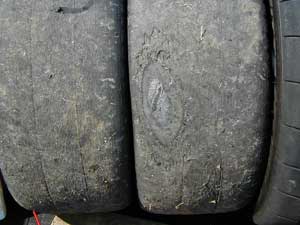
Most people speculate that a single event may add two weeks to one month of normal wear to your tires and brakes.
Most other components of a car are not affected. If you get hooked on autocrossing, purchasing a second set of wheels and tires to sustain the added wear each month is a good idea, but not necessary.
Back to Top
What facilities/services are available at the event?
-
Food - Depending on the event site, you might be able to purchase food, leave the site to get food, or you might want to pack your lunch. During spring and summer events it's important to have enough water on hand to beat the heat.
-
Restrooms - There will be restrooms or a port-o-let at the event site.
-
Compressed Air - Many competitors bring small air compressors to add air to their tires. If you don't own one, don't worry. Most autocrossers are friendly people who don't mind sharing and helping out a fellow driver.
Back to Top
What does it cost to run?
Event Fees are:
-
$35 - SCCA Members
-
$50 - Non-members
-
$47 - Non-Member Students/Non-Member Military
-
$30 - Junior Karts
The above fees are for Pre-Registered Entries. Registering on-site the morning of the event will incur an additional $5 on-site registration fee.
Back to Top
What does it cost join the SCCA and what are the benefits of joining?
With your membership, you'll receive:
-
Discount of entree fees at any regional SCCA event in the United States.
-
A subscription to SportsCar, the SCCA official monthly national magazine.
-
Discounts on merchandise and services from selected companies that partner with the SCCA.
-
The opportunity to compete in Divisional and National SCCA events.
-
The opportunity to hold a competition and volunteer license.
-
Vote in SCCA elections and serve on committees, chairs and directors.
-
All SCCA members are protected with the best event-related insurance program in motorsports at no additional cost. Properly registered SCCA members who are accidentally injured while participating at SCCA events are covered for up to $1 million in medical expenses. SCCA members, in certain circumstances, are also provided with limited third-party liability insurance coverage at most events. Contact the SCCA Risk Management Department at the national office for details.
Back to Top
What are Regional, Divisional and National events?
Regional events are put on monthly be each regional organization such as us - the Red Hills Region as part of the South East Division of SCCA. There are typically 3 to 4 Divisional events each season. A division is made up of the regions in a particular area in the United States. Our Region is a part of the Southeast Division. To compete in a Regional Event you must be an SCCA member. These events are a true treat to compete in or just watch. Anyone who has ever been to a divisional will recommend it. National events attract the fastest drivers from all over the US. To compete in a national event, you must be an SCCA member and have competed in at least one divisional event that year. Just like divisional events, anyone who has ever attended recommends the experience.
Back to Top
What kind of liability is there?
SCCA sanctioned events are required to carry liability insurance for the site, event, and each participant competing. All SCCA members are protected with the best event-related insurance program in motorsports at no additional cost. Properly registered SCCA members who are accidentally injured while participating at SCCA events are covered for up to $1 million in medical expenses. SCCA members, in certain circumstances, are also provided with limited third-party liability insurance coverage at most events. Contact the SCCA Risk Management Department at the national office for details. The cost of the insurance is included in your entry fee.
Back to Top
What is a typical day at the runs like? (first sign in, then tech, then driver's meeting, then line up in grid, then run, etc.)?
8:00am: Gates Open
8:30am: Registration and Tech Open. Course is open for walking.
9:30am: Registration and Tech Close. Novice walk through the course.
9:50am: Drivers Meeting. Drivers and classes assigned to run groups.
10:10am: First car on course in first run group. Second run group works the course chasing cones. When the first run group finishes then the second run group runs and the first run group works the course.
4:00pm: Last run group finishes. Course cleanup begins.
4:30pm: Trophy presentations
4:45pm: Head home and tell your friends what a great time you had.
Before the event there will be a Novice Walkthrough. The Novice Chair will walk the course one last time with all interested drivers and explain the basics of how to drive and not get lost. When your first run comes, if you're still complacent about finding your way around the course, we'll send a more experienced driver with you to help guide you through. Any other help or questions you have, just ask someone. Red Hills is a very friendly place to run. We're all here to help each other go fast and have fun. Even drivers competing against each other in the same class.
Back to Top
 Will I have to work the track? Will I have to work the track?
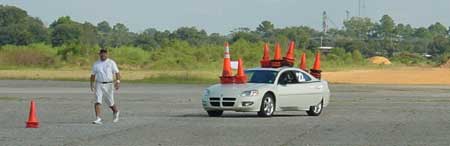
All drivers have to work. Not all will be working the course, but it is a good place to get close up view as to what's going on. If you've never worked the course before be sure to mention it to the person giving work assignments. They will pair you with someone experienced in working the course to keep you safe and show how to do it.
Back to Top
Is there a novice class?
Yes. When there are enough novices entered a single novice trophy is awarded at the end of the day. The winner is determined by your best time factored against the class you in which you drove. The system is referred to as the Pax index. The lowest "Paxed" time wins the novice class. Once you win the novice class, you are no longer eligible to compete in it.
Back to Top
Is the event held in the same place every month?
The events are typically held at the South Georgia Motorsports Park in Adel, GA (just north of Valdosta) unless otherwise specified. Should an event be held at another site, there will be an advance notice to all members and some competitors of the change of venue, along with information on the Web site, newsgroup, the monthly meeting, and the previous month's event.
Back to Top
What is the PAX/RTP Index?
The PAX (Professional Auto-X) Index has been used by SCCA and other clubs for years. It is a handicapping system that attempts to account for performance differences between car classes, allowing the drivers' performances to be compared. A PAX factor is assigned to each class; the faster the class, the higher the factor. The fastest cars have a PAX factor of 1.000; other PAX factors are a percentage based on performance potential relative to the fastest cars. Each driver's actual time around the course is multiplied by their car's PAX factor to calculate their PAX time. This PAX time is also called their indexed time or factored time. PAX times can then be compared across classes.
The RTP (Racers Theoretical Performance) index is a separate set of indexes, calculated from different events, but basically similar.
In 2002 both of these indexes were combined when a revised index was created called PAX/RTP. The PAX/RTP Index was developed and is maintained by Rick Ruth of Missouri and reflects study of results from over 200 nationwide Solo events including, the Tire Rack® Solo National Championships, National Tour, Atlanta Region, Chicago Region, California Sports Car Club, Central Florida Region, Great American Solo Series, Hawaii Region, Houston Region, Midwest Divisional Series, Milwaukee Region, New England Region, Northwest Region, Northern New Jersey Region, Oregon Region, Philadelphia Region, San Francisco Region, San Diego Region, South Jersey Region, St. Louis Region, Tri-State Sports Car Council, Texas Region, Washington DC Region, Wisconsin Autocrossers Inc., and many others.
Information about the 2015 PAX/RTP is posted and maintained at Chicago PAX/RTP Index
Back to Top |

